
Introduction
Server performance is heavily influenced by how efficiently data is delivered to users. Without optimization, every request may require repeated database queries, file processing, or complex computations. This increases load and slows down response times.
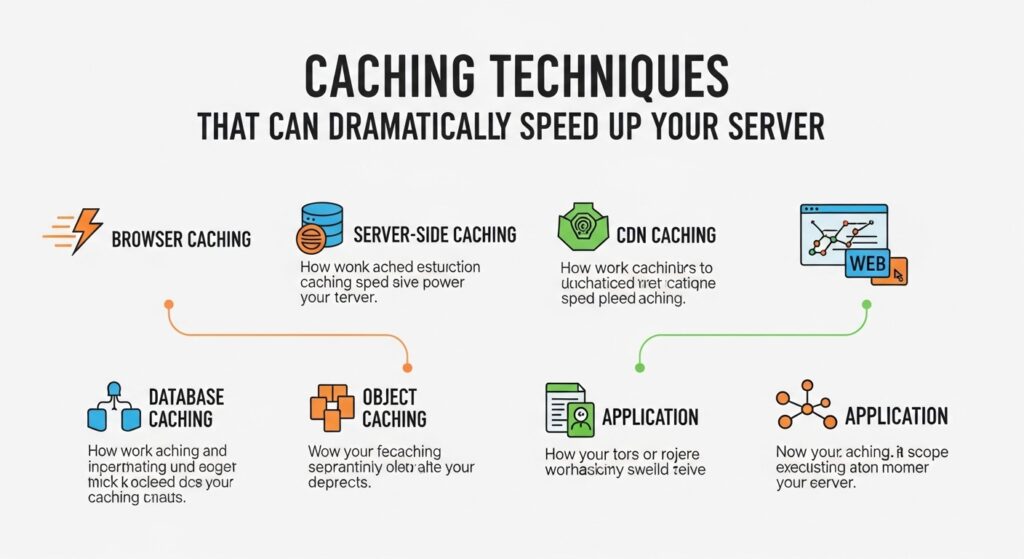
Caching is one of the most effective techniques to improve speed and reduce server strain. It works by storing frequently accessed data in a temporary storage layer so it can be served quickly without repeating expensive operations.
This guide explains the most powerful caching techniques used to dramatically improve server performance.
1. Browser Caching
Browser caching stores static files such as images, CSS, and JavaScript directly in the user’s browser. When a user revisits a website, these files are loaded from local storage instead of being downloaded again.
This reduces server requests and improves page load speed significantly. Proper configuration involves setting cache control headers that define how long files should be stored in the browser.
2. Server Side Page Caching
Page caching stores fully rendered HTML pages on the server. Instead of generating a page dynamically for every request, the server serves a prebuilt version.
This is especially useful for content heavy websites like blogs or news portals. It reduces CPU usage and improves response time dramatically under high traffic conditions.
3. Object Caching
Object caching stores results of expensive operations such as database queries or API calls. Instead of repeating the same computation, the result is retrieved from cache memory.
This technique is commonly used in dynamic applications where certain data is requested frequently but does not change often.
4. Database Caching
Database caching reduces load on the database by storing frequently accessed query results in memory. Tools like Redis and Memcached are widely used for this purpose.
By reducing direct database calls, applications experience faster response times and improved scalability.
5. Content Delivery Network Caching
A Content Delivery Network stores cached versions of static content on distributed servers around the world. When a user accesses a website, data is delivered from the nearest location.
This reduces latency and improves load times for users regardless of their geographic location. It also reduces traffic load on the main server.
6. Opcode Caching
Opcode caching stores compiled PHP code in memory so it does not need to be recompiled on every request. This significantly improves execution speed for PHP based applications.
It reduces processing overhead and enhances overall server efficiency, especially for high traffic websites.
7. Reverse Proxy Caching
A reverse proxy cache sits between users and the origin server. It stores copies of responses and serves them directly when similar requests are made.
This reduces the load on backend servers and improves response time. Nginx and Varnish are commonly used for this purpose.
8. Edge Caching
Edge caching stores content closer to end users at network edge locations. This minimizes the distance data has to travel, resulting in faster delivery.
It is particularly effective for global websites with users spread across different regions.
9. Cache Invalidation Strategies
Caching is only effective when data remains accurate. Cache invalidation ensures outdated content is removed or refreshed when changes occur.
Common strategies include time based expiration, manual clearing, and event driven updates when data changes in the system.
10. Best Practices for Caching
Use multiple layers of caching for maximum performance. Avoid caching sensitive or frequently changing data without proper invalidation. Monitor cache hit rates to evaluate efficiency. Always balance performance gains with data accuracy.
SEO Keywords and Optimization
Primary keywords include server caching techniques, web caching strategies, improve server speed, and caching for performance optimization. Secondary keywords include browser caching, Redis caching, CDN caching, reverse proxy caching, and database performance tuning.
To improve SEO, structure content with clear headings, include actionable explanations, and integrate keywords naturally. Focus on solving user problems with practical examples and clear guidance.
Conclusion
Caching is one of the most powerful tools for improving server performance. By using multiple caching layers such as browser caching, database caching, and CDN caching, you can significantly reduce server load and improve response times. Proper implementation ensures faster websites, better scalability, and improved user experience.