
Introduction
Choosing the right type of server is one of the most important decisions when hosting a website or application. The performance, security, scalability, and cost of your project all depend on this choice. The three most common hosting options are shared servers, VPS servers, and dedicated servers.
Each option is designed for different needs. This guide explains how they work, their advantages and limitations, and how to choose the right one for your project.
1. What is Shared Hosting
Shared hosting means multiple websites are hosted on the same physical server and share its resources such as CPU, RAM, and storage.
Advantages of Shared Hosting
- Very low cost and beginner friendly
- Easy setup with minimal technical knowledge
- Maintenance handled by the hosting provider
Disadvantages of Shared Hosting
- Limited performance due to shared resources
- Slower speed during high traffic
- Less control over server configuration
- Security risks from other websites on the same server
Best Use Case
Shared hosting is ideal for small websites, blogs, portfolios, and beginners who do not expect high traffic.
2. What is a VPS Server
A Virtual Private Server is a virtualized environment where a physical server is divided into multiple isolated servers. Each VPS has its own allocated resources and operating system.
Advantages of VPS Hosting
- Dedicated portion of server resources
- Better performance and stability than shared hosting
- Full root access and customization control
- Scalable resources depending on traffic needs
Disadvantages of VPS Hosting
- More expensive than shared hosting
- Requires technical knowledge for management
- Performance still depends on underlying physical server
Best Use Case
VPS hosting is ideal for growing websites, web applications, e commerce platforms, and developers who need flexibility and control.
3. What is a Dedicated Server
A dedicated server is a physical server entirely dedicated to a single user or organization. All resources belong exclusively to one client.
Advantages of Dedicated Hosting
- Maximum performance and speed
- Full control over hardware and software
- Strong security and isolation
- Suitable for very high traffic websites
Disadvantages of Dedicated Hosting
- High cost compared to other options
- Requires advanced technical expertise
- Maintenance and management responsibility on user
Best Use Case
Dedicated servers are ideal for large scale applications, enterprise systems, gaming servers, and high traffic platforms that require maximum performance.
4. Key Differences Between Shared, VPS, and Dedicated Servers
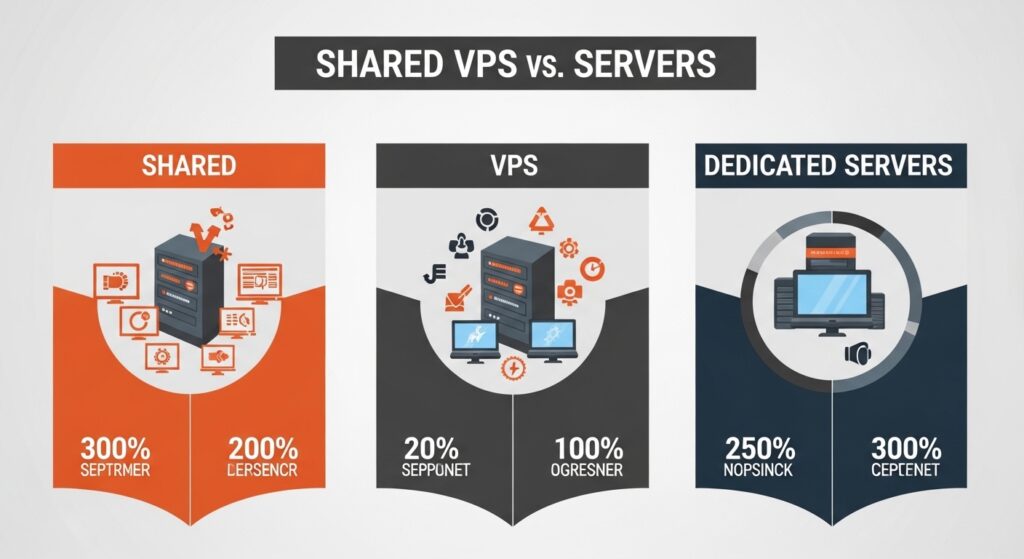
Shared hosting offers low cost but limited performance. VPS provides a balance between cost and control. Dedicated servers deliver the highest performance but come with higher costs and complexity.
5. How to Choose the Right Server
Choosing the right server depends on your needs.
Choose Shared Hosting if
- You are a beginner
- You have a small website or blog
- You want a low cost solution
Choose VPS Hosting if
- Your website is growing
- You need more control and performance
- You run web applications or online services
Choose Dedicated Server if
- You have high traffic requirements
- You need maximum performance and security
- You run enterprise level applications
6. Performance and Scalability Considerations
Shared hosting has the lowest scalability. VPS hosting allows flexible scaling based on demand. Dedicated servers offer maximum scalability but require manual upgrades or infrastructure planning.
7. Security Comparison
Shared hosting has the highest risk due to shared environments. VPS provides isolated security, reducing risks. Dedicated servers offer the highest level of security due to full isolation and control.
SEO Keywords and Optimization
Primary keywords include shared vs VPS vs dedicated servers, web hosting comparison, best server type, and server hosting guide. Secondary keywords include VPS hosting benefits, dedicated server advantages, hosting performance comparison, and website hosting options.
For SEO optimization, use structured headings, clear comparisons, and keyword rich explanations. Focus on user intent by answering which hosting option is best for different scenarios.
Conclusion
There is no single best server type for everyone. Shared hosting is best for beginners, VPS is ideal for growing projects, and dedicated servers are perfect for high performance needs. Understanding your traffic, budget, and technical requirements will help you choose the right hosting solution for your project.